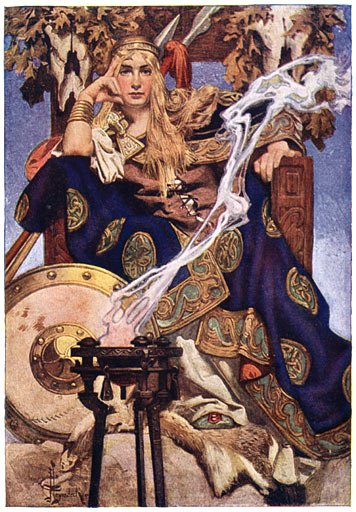
Hello again! If you recall, last week I began the tale of Cu Chulainn and the Champion’s Portion. Today, I will be continuing this epic tale of a bunch of people trying to determine who gets to eat what at a party.
So let’s continue.
Hello again! If you recall, last week I began the tale of Cu Chulainn and the Champion’s Portion. Today, I will be continuing this epic tale of a bunch of people trying to determine who gets to eat what at a party.
So let’s continue.
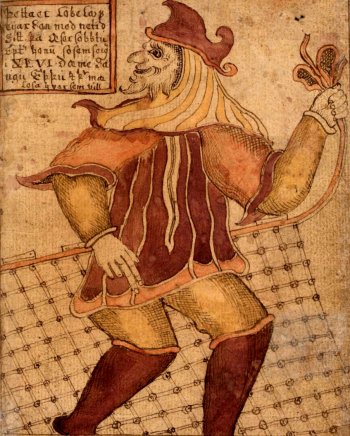
You know, I haven’t talked about the Ulster Cycle for a while, so let’s do that now.
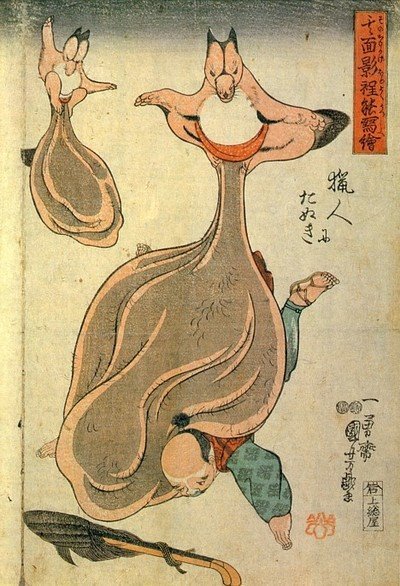
Hello again, friends, and welcome to yet another Mythology Monday. Today, we’re going to talk about the Japanese mythical creature, or youkai, known as the tanuki.
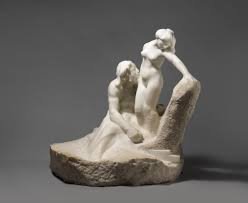
Hello again, friends! It’s Monday, so you know what that means: time to dig out some ancient myths. This week, I’m going to talk about Pygmalion, and how he brought his RealDoll to life.
So, let’s get started!

OK, I know that this is going to actually hit the blog on the 13th, aka the day after Easter. But I’m writing it on Easter, and it’s going up on the Patreon on Easter, so I’m counting it.
Today, we’re going to talk about the origins of the holiday, and how it may actually be older than you think.

I don’t think I’ve written about a Japanese tale for a while. Let’s remedy that, shall we?
Today we’re going to talk about “The Tale Of The Bamboo Cutter.”
So, to start off, we have this old bamboo cutter named Taketori no Okina, and his wife. The two of them have a couple of problems that are making their lives suck a little bit more than necessary: 1) they have no kids, and 2) bamboo cutting doesn’t pay very well, so they’re dirt poor.
One day, Taketori no Okina is out and about, doing his job, when he finds a little girl in a stalk of bamboo he just chopped. And when I say little, I don’t just mean she’s young: I mean she’s about three inches tall. He ignores how obviously weird this whole thing is, and decides to bring her home to his wife. The pair decide to raise her as their own and name her Kaguya, and that’s problem number one sorted.
That’s not all, though. After this, whenever Taketori no Okina cuts some bamboo, gold nuggets pop out. This makes him absolutely wealthy, and he’s able to build a big old house for his wife and adopted daughter. Which, as you can see, solves their second problem.
So things are going pretty well for the three of them, and Kaguya grows up to be ridiculously beautiful, which is par for the course for these sorts of stories. This, of course, leads to suitors calling. Five of them, to be precise. Kaguya rejects all their advances. Taketori no Okina, worried about what would become of her after he dies, tells her to just pick one.
She relents, but only if they can complete some hilariously impossible tasks. The first suitor she sends of to get the Buhdda’s stone begging bowl from India, the second a branch from the jeweled trees of the mythical island of Hokai, the third is charged with getting the robe of the Chinese fire-rat, the fourth a jewel from a dragon’s neck, and the fifth a cowrie shell born from a swallow.
The first three give her fakes, the fourth gives up because he ran into a nasty storm, and the fifth just straight up dies in the attempt.
So, eventually the Emperor hears about this really hot lady living with some woodcutters, and decides to go off and see her for himself. And, of course, as soon as he claps eyes on her, he proposes. Kaguya tells him she can’t marry him, because she’s not from this land, but the two become close friends.
Anyway, one day Kaguya’s parents see her looking up the moon, all sad. They ask her what’s wrong, and she explains that she’s from the moon. See, she had been sent to earth as punishment for some vague indiscretion, and her sentence is up, meaning she has to go back soon. The Emperor, upon hearing this, sends a bunch of guards to the bamboo cutter’s house to try and keep her from leaving. The moon, however, has other plans, and strikes all the guards blind when her escort arrives.
Before she leaves, though, she leaves behind her cloak, and sends the Emperor a letter with the Elixir of Life attached. Then her entourage puts a cloak on her shoulders which makes her forget about her love for humanity as they whisk her back off to the moon.
The Emperor, meanwhile, is too despondent to actually drink the elixir, and instead sends a bunch of his soliders off to Mt. Fuji in order to burn it.
And that, my friends, is the “Tale Of The Bamboo Cutter.” I’ve also heard it called the “Tale Of Princess Kaguya,” which is also the title of a 2013 Studio Ghibli film based on the story, and honestly, I think I like that title better. The story, in fact, focuses more on her than on Taketori no Okina.
Also, the name Kaguya tends to pop up a lot in different anime, and was actually one of the inspirations behind Naoko Takeuchi’s Sailor Moon. So, there’s that.
((Hey, folks! Do you like what I do? Then please consider supporting me on Patreon, Ko-Fi, or PayPal! Since I’m on furlough for my job indefinitely, it would really help me out. You can also follow me on Twitter, Facebook, and Tumblr, and can follow the blog directly for updates. Thanks!)Hey, folks! Do you like what I do? Then please consider supporting me on Patreon, Ko-Fi, or PayPal! Since I’m on furlough for my job indefinitely, it would really help me out. You can also follow me on Twitter, Facebook, and Tumblr, and can follow the blog directly for updates. Thanks!)

Today’s story is one that you are probably quite familiar with, considering that it’s the source of a popular idiom that means “to overreach.” So, yeah, we’re going to talk about Icarus, and how he would have been fine if he’d just, you know, listened to some very good advice.

Today, we’re going to take a look at a Russian folk tale that starts off rather familiar, but then goes completey off the rails.
So, to start off with, we have a merchant and his wife. The two of them have a beautiful daughter named Vasilisa. One day, when Vasilisa is about eight, her mom comes down with an unspecified illness and dies.
Before dying, though, she hands her daughter a doll, and tells her to feed it whenever she needs help. Turns out that the doll is magical and comes to life whenever she gives it food or drink. This comes in very handy later in the tale.
Some time passes, and the merchant decides it’s time for him to find himself another wife. He meets a wido with two daughters, they hit it off, and eventually get married.
And then they live happily every after.
Just kidding, the stepmother and stepsisters proceed to make Vasilisa’s life hell, basically making her a slave in her own home. Why the dad doesn’t put a stop to it, I don’t know, but let’s move on.
Some more time passes, and Vasilisa grows up to be, you guessed it, beautiful. This leads to her getting a lot of male attention, whcih pisses off the stepmother to no end because no one even looks at her own daughters. So, as you can imagine, she decides to plot her stepdaughter’s death.
She gets her chance when her husband leaves for an extended business trip. As soon as he’s out the door, she gathers the other three up and heads to a house at the edge of a very dark, very intimidating forest. Specifically, it’s the forest of the fearsome Baba Yaga.
For context, Baba Yaga is a prominent figure in Slavic folklore. She’sa forest witch with a mobile house and a penchant for eating people. In other words, not really someone you’d want to encounter.
One day, the stepmother and stepsisters blow out all the candles in the house. They’re all like, “Whoops, we have no way to relight these candles. Vasilisa, head out to the woods and see if Baba Yaga has a light.”
Before they can protest, they shove her out the door and shut it. With no real options, Vasilisa heads out into the woods.
While on her way, she comes across three dudes: one in white on a white horse, one in red on a red horse, and a third in black on a black horse. The last one she sees when she comes across Baba Yaga’s hut. Which is decorated with human bones, including a whole bunch of glowing skulls.
Vasilisa is rooted to the spot with fear, so just stands there up until Baba Yaga actually comes home. Baba Yaga asks her why she’s standing in front of her house, and Vasilisa gives her the rundown on her predicament.
Baba Yaga thinks for a moment, then says, “OK, I’ll give you a light if you do some household chores, then spearate out dirts specks from my wheat and poppy seeds. If you fail, I’ll just eat you.”
Vasilisa agrees, and Baba Yaga goes to bed, at which point Vasilisa gives her doll a snack. it wakes up and is like, “Don’t worry, girl, I got this.”
The next day, Baba Yaga leaves to do whatever it is she does, and Vasilisa and the doll get to work. Amazingly, between the two of them, they manage to finish it all before she returns home.
Baba Yaga is disppaointed by this, but knows when she’s beat. She summons three pairs of disembodied hands to take the poppy seeds and wheat before handing Vasilisa one of her skulls to use as a light.
She then asks the girl if she has any questions, and Vasilisa asks about the three horsemen she saw. Baba Yaga explains that they’re the day, the sun, and the night respectively, then asks if she has anything else she wants to ask. Vasilisa is about to ask about the hands, but then decides that she doesn’t really want to know and says, “Nope, I’m good.”
Baba Yaga then asks how Vasilisa managed to finish her tasks so quickly, and she responds that it was through her mother’s blessing. Baba Yaga responds, “Nope, don’t want no blessings around here,” before telling Vasilisa to GTFO.
Vasilisa, skull in hand, makes it back to her house. Instead of lighting the candlles, though, the skull ends up incinerating her stepmother and stepsisters. Which is pretty hardcore.
With her problems murdered, Vasilisa buries the skull. She then heads into town, where she apprentices herself to a weaver and ends up marrying the tsar.
So, as you can see, there are a number of similaries between this story and the tale of Cinderella. If Cinderella didn’t fuck around wiith the shoe nonsense and just straight up killed her horrible family.
Which is pretty god damned metal if you think about it, and totally fitting for Russia.
(So, fun fact: my job is furloughed indefinitely because of the pandemic! Whee! What that means is I have no idea when I’ll be getting my next paycheck. Fortunately, I have Patreon and Ko-Fi, so if you’d like to support the blog, thtat’s where you’d do it. Thanks!)
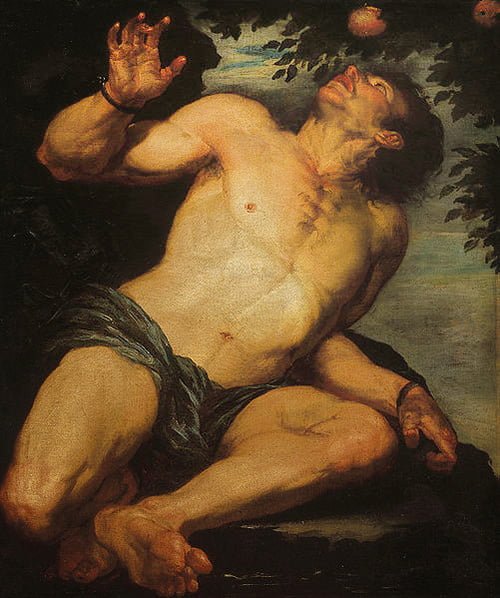
You may be aware of the myth of Tantalus, or at least the punishment he received in Ancient Greek Hell. But what you might not know is what he was being punished for. So buckle in, folks, as Tantalus does quite possibly the dumbest thing he could possibly do.

I haven’t done any Norse myths for a while, so I figured I’d dip back in to that well for this week.
Get it? Because this story is about a well? Anyway, on with the post.
 Katethulu's Cave Of Mysteries