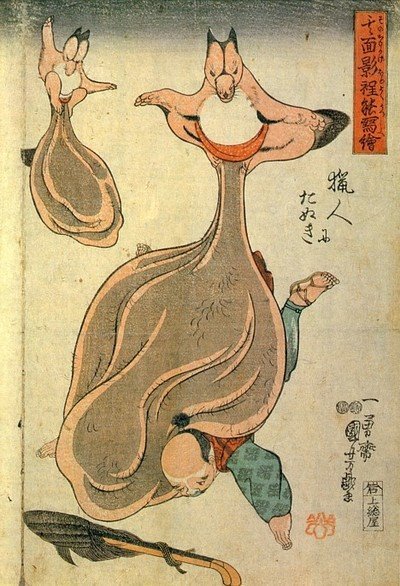
Hello again, friends, and welcome to yet another Mythology Monday. Today, we’re going to talk about the Japanese mythical creature, or youkai, known as the tanuki.
Hello again, friends, and welcome to yet another Mythology Monday. Today, we’re going to talk about the Japanese mythical creature, or youkai, known as the tanuki.
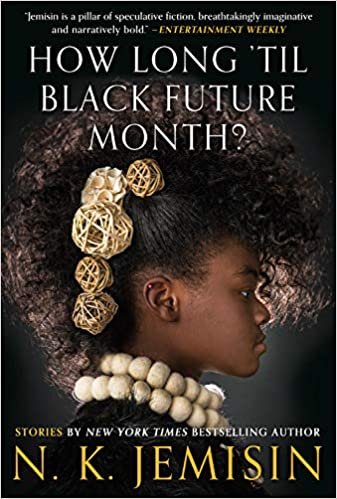
Well, folks, last week I said I’d talk to a story written as a response to Le Guin’s “Those Who Walk Away From Omelas,” and that time has now come. Today, I’m going to talk about N. K. Jemisin’s story, “The Ones Who Stay And Fight,” published in the collection How Long ‘Til Black Future Month?
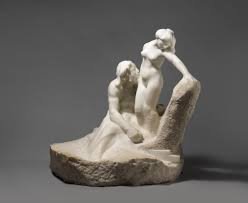
Hello again, friends! It’s Monday, so you know what that means: time to dig out some ancient myths. This week, I’m going to talk about Pygmalion, and how he brought his RealDoll to life.
So, let’s get started!
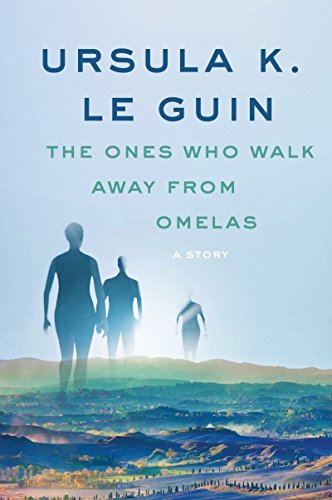
Hello again! This week, I’ve decided to talk about Ursula K. Le Guin’s story, “The Ones Who Walk Away From Omelas.”
So strap in, friends, because this is about to get heavy. Even heavier than last week’s post.

OK, I know that this is going to actually hit the blog on the 13th, aka the day after Easter. But I’m writing it on Easter, and it’s going up on the Patreon on Easter, so I’m counting it.
Today, we’re going to talk about the origins of the holiday, and how it may actually be older than you think.

Hello again! It’s that time of the week, and for this Saturday, I’ve decided to discuss Shirley Jackson’s story “The Lottery.”
Trust me, it’s not as much fun as it sounds.

I don’t think I’ve written about a Japanese tale for a while. Let’s remedy that, shall we?
Today we’re going to talk about “The Tale Of The Bamboo Cutter.”
So, to start off, we have this old bamboo cutter named Taketori no Okina, and his wife. The two of them have a couple of problems that are making their lives suck a little bit more than necessary: 1) they have no kids, and 2) bamboo cutting doesn’t pay very well, so they’re dirt poor.
One day, Taketori no Okina is out and about, doing his job, when he finds a little girl in a stalk of bamboo he just chopped. And when I say little, I don’t just mean she’s young: I mean she’s about three inches tall. He ignores how obviously weird this whole thing is, and decides to bring her home to his wife. The pair decide to raise her as their own and name her Kaguya, and that’s problem number one sorted.
That’s not all, though. After this, whenever Taketori no Okina cuts some bamboo, gold nuggets pop out. This makes him absolutely wealthy, and he’s able to build a big old house for his wife and adopted daughter. Which, as you can see, solves their second problem.
So things are going pretty well for the three of them, and Kaguya grows up to be ridiculously beautiful, which is par for the course for these sorts of stories. This, of course, leads to suitors calling. Five of them, to be precise. Kaguya rejects all their advances. Taketori no Okina, worried about what would become of her after he dies, tells her to just pick one.
She relents, but only if they can complete some hilariously impossible tasks. The first suitor she sends of to get the Buhdda’s stone begging bowl from India, the second a branch from the jeweled trees of the mythical island of Hokai, the third is charged with getting the robe of the Chinese fire-rat, the fourth a jewel from a dragon’s neck, and the fifth a cowrie shell born from a swallow.
The first three give her fakes, the fourth gives up because he ran into a nasty storm, and the fifth just straight up dies in the attempt.
So, eventually the Emperor hears about this really hot lady living with some woodcutters, and decides to go off and see her for himself. And, of course, as soon as he claps eyes on her, he proposes. Kaguya tells him she can’t marry him, because she’s not from this land, but the two become close friends.
Anyway, one day Kaguya’s parents see her looking up the moon, all sad. They ask her what’s wrong, and she explains that she’s from the moon. See, she had been sent to earth as punishment for some vague indiscretion, and her sentence is up, meaning she has to go back soon. The Emperor, upon hearing this, sends a bunch of guards to the bamboo cutter’s house to try and keep her from leaving. The moon, however, has other plans, and strikes all the guards blind when her escort arrives.
Before she leaves, though, she leaves behind her cloak, and sends the Emperor a letter with the Elixir of Life attached. Then her entourage puts a cloak on her shoulders which makes her forget about her love for humanity as they whisk her back off to the moon.
The Emperor, meanwhile, is too despondent to actually drink the elixir, and instead sends a bunch of his soliders off to Mt. Fuji in order to burn it.
And that, my friends, is the “Tale Of The Bamboo Cutter.” I’ve also heard it called the “Tale Of Princess Kaguya,” which is also the title of a 2013 Studio Ghibli film based on the story, and honestly, I think I like that title better. The story, in fact, focuses more on her than on Taketori no Okina.
Also, the name Kaguya tends to pop up a lot in different anime, and was actually one of the inspirations behind Naoko Takeuchi’s Sailor Moon. So, there’s that.
((Hey, folks! Do you like what I do? Then please consider supporting me on Patreon, Ko-Fi, or PayPal! Since I’m on furlough for my job indefinitely, it would really help me out. You can also follow me on Twitter, Facebook, and Tumblr, and can follow the blog directly for updates. Thanks!)Hey, folks! Do you like what I do? Then please consider supporting me on Patreon, Ko-Fi, or PayPal! Since I’m on furlough for my job indefinitely, it would really help me out. You can also follow me on Twitter, Facebook, and Tumblr, and can follow the blog directly for updates. Thanks!)

Welcome back, friends! Today, I’ve decided to talk about Neil Gaiman’s story “Chivalry.” Now, since that one isn’t public domain, it’s a bit harder to find a link to the story. However, if you do want to read it (which I recommend), you can find it in the 1998 anthology Smoke and Mirrors. Or, if you’d prefer, you can have LeVar Burton read it to you.
With that out of the way, let’s begin.

So, was anyone going to tell me there was going to be a Bravely Default sequel, or did I have to learn that when a demo dropped on the Switch store?
First, some background: Bravely Default was an RPG, published by Square Enix for the Nintendo 3DS in 2012. It’s basically a Final Fantasy game, but with a different name: it had a plot revolving around crystals, and a lot of the spells and items were the same. It also had a variation on the job system that a lot of Final Fantasy games have. Essentially, you could change characters’ classes to fill different roles.
One major difference, however, is the mechanic that the series takes its name from: in battles, characters can skip turns to build up “brave points” which can then be spent to give a character more than action per turn. Knowing when to default and when to brave was a key component to winning fights.
Needless to say, the first game in the series was very well received, and it was only a matter of time until a sequel came out. Which is, I think, part of why I was taken by surprise here: there was already a sequel, Bravely Second: End Layer, that came out for the 3DS in 2015.
That one was actually a direct sequel to the first one, featuring a number of the same characters in the same world. That one, however, had a bit more of a lukewarm reception than the first one. So, I suppose that’s why they decided to just go ahead and title the next game Bravely Default II.
Bravely Default II is going to revolve around completely different characters, in a brand new world, which is also how the Final Fantasy series generally operates. This time, we have Gloria, the last remaining princess of a ruined kingdom; Seth, a shipwrecked sailor; Elvis, a scholar; and Adelle, a mercernary. They are on a quest to, you guessed it, save the world. Like the other two games, on their journeys they come across mysterious items called Asterisks, which allow them to take on different roles in battle. In particular, the demo showcases 4: vanguard, monk, white mage, and black mage.
Having played the demo recently, it seems to play mostly the same as the previous titles. One major difference, though, has to do with the hardware. Since the 3DS had two screens, the bottom screen was utilitzed to show maps or other information, while character movement, battles, and scenes took place on the top screen. Since the Switch only has one screen, all of the information has to be presented on that screen. There’s also the fact that the game is at a much, much higher resolution, which makes sense considering that the 3DS is a nine-year-old handheld with fairly small screens.
Another major change from the other two is that the demo seems to have done away with random battles, instead having monsters roam around environments, with battle starting when the party encounters one. This is very similar to how the battles work in the Tales series, or later Persona titles.
The demo, as mentioned before, is currently available on the Switch store if you want to check it out. Unfortuantely, as for a release date, we currently don’t have one other than “sometime this year.” This seems to mostly be so that the developers can incorporate feedback.
I do hope that we get a release date soon, though, because I really want to see more of the game.
(So, fun fact: my job is furloughed indefinitely because of the pandemic! Whee! What that means is I have no idea when I’ll be getting my next paycheck. Fortunately, I have Patreon and Ko-Fi, so if you’d like to support the blog, that’s where you’d do it. Thanks!)
 Katethulu's Cave Of Mysteries